"Later in the class, we could hear some kind of strange siren going off in the distance. The school isn't too far from the fire station, so I imagine it was some sort of fire alarm. But it sounded a lot like the old WWII bombing-raid alarms that you hear in movies. I turned to Ms. Americanized. 'Are the Americans bombing again?'* I asked.
*Normally, this is not a joke you'd want to make in Japan, as you can imagine they're still kind of sensitive to that kind of thing.
Ms. Americanized turns to me, and in all earnesty, says 'God I hope so.' ....Whoa! Homey say what now?! I didn't get to actually say that, but she must've read the expression on my face, so she elaborated. 'If they did, maybe, just maybe, I'd finally get a day off. C'mon America. Come bomb the shit out of us.'"
Friday, December 30, 2005
Work is sometimes tough on the Japanese.
Outpost Nine :: Editorials :: I Am a Japanese School Teacher:


Thursday, December 29, 2005
The essence of Japan.
Outpost Nine :: Editorials :: I Am a Japanese School Teacher:
"I was telling Ms. Americanized about this, and she laughed and nodded. 'We know it's hot, we don't need reports from every Japanese prefecture about it!' I laughed, and she added 'But that's Japanese people for you. We want to feel harmony in knowing that other people feel the same way we do. As long as everyone is feeling the exact same thing, then we're content.' This had me cracking up...because it's absolutely right. That news broadcast was essentially saying 'You are hot? We all are! We are one. Resistance is futile.'"
Outpost Nine :: Editorials :: I Am a Japanese School Teacher
"I Am a Japanese School Teacher" is the funniest, and occasionally most touching, writing about being an ALT on the JET Programme that I've come across. Great stuff. I've spent the last two days reading about his life in Japan.
If I was a third of the writer he was, this blog wouldn't quite... suck... so bad.
But hey, at least I link to cool stuff.
I Am a Japanese School Teacher
Outpost Nine :: Editorials :: I Am a Japanese School Teacher:
If I was a third of the writer he was, this blog wouldn't quite... suck... so bad.
But hey, at least I link to cool stuff.
I Am a Japanese School Teacher
Outpost Nine :: Editorials :: I Am a Japanese School Teacher:
"The worst part is, even I stopped caring too! That last little shred of American sanity is screaming at me 'Dude, that was fucking weird! That boy aint right! Do something!' But the rest of my brain, which is slowly but surely being assimilated by Japanese culture, is saying 'Oh, ha ha ha! He tried very hard to grab my big black American penis. I admire his 'gambatte!' spirit! Now, I must remember to pick up some tentacle rape animated porn on the way home from work, and see if I can't grope a few high school girls on the train as I go.'"
Tough girl.
Under the Wagon: Dichotomy:
"The Management hereby announces the penalties for the following statements:
'Deep down, you're not that tough.' 'You only act all hard-bitten to keep people from getting close to you.' 'I know that underneath it all you're a softy.'
Penalty: I stab you in the eye with a fork
'Jesus, you really don't have any feelings at all, do you?' 'You just hate romance and love and anything nice.' 'You're not interested in a normal relationship.'
Penalty: Either a nut-slap or a titty twister, depending on gender."
"The Straw Man has become the default argument." God, I do not miss American politics.
Kung Fu Monkey: New Year's Resolution:
"There are times I feel like we've reached a tipping point, where all the progressive and conservative grown-ups just looked at each other and said 'Right, time to step in here' ... orrrr I'm Ian Holm in The Day After Tomorrow: 'Save who you can.' It is very, very hard not to discuss other people's reasoning facilities without coming across an an arrogant prat, but here's my point:
-- There were no WMD's in Iraq. At all.
-- The Administration, it's been proved, used intel they knew was bad during the run-up to the war.
-- The Administration sent our troops to war with insufficient equipment, and has both cut funding for their medical care and undermined their families' abilities to survive financially with the Bankruptcy Bill
-- The Administration has rained tax cuts down for the rich, while just recently cutting benefits for the middle class and students -- not to mention the insanity of tax cuts for the rich during wartime.
-- The Administration did not plan adequately for the post-war period.
-- The Department of Homeland Security is a joke. (Oh, and let me be another voice in the chorus: when's the last time we had a terror alert?)
-- This Administration has openly argued that it must retain the right to torture people, even if they don't. Honest. To defend the American Way.
-- The Administration has been illegally monitoring our electronic communications, circumventing even the rubber stamp from the sluttiest Court in the land. Not only that, when confronted with this, the Administration used the opportunity to push the idea that this was okay, because the President has unlimited powers during war. And if that 'war' happens to last for another twenty to fifty years, oh well ...
... all this, and people still aren't, well, pissed off. Jesus, people, what'll it take? By any objective standards, standards set by Republican and Democratic lawmakers alike, these folk have done a bad job of securing the Homeland, running a war, and protecting the Constitution in both spirit and deed. What's more, we're not even being allowed to have reasonable, sober discussions about policy because this Administration has validated the "scream and finger-point" methodology for dissent.
Listen, I may well be all for the goddam Iraq War if someone, anyone, could lay out the operational goals and specific strategies, with progress benchmarks, for the conflict. You may scream at me, you may think I'm a traitor for even asking, fine, but my point is even if you think I ought to be in a John Aschcroft Re-Education Camp, you ought to be able to answer the question. But no, that's "defeatist" thinking. Or, I'm "Monday Morning Quarterbacking" the "fine patriotic folks who are working so hard." Because it's not results that matter in this Bizarro World we've wound up in, it's intent. It doesn't matter that the President's broken the law, it's okay because he meant well. A rationalization we wouldn't let our eleven year old get away with, we let the President slide.
The Straw Man has become the default argument. If I want to know the benchmarks, I'm for "cutting and running." See, in my world, the real one, without benchmarks we can't know if something is working, or not working, and if it has to be adjusted so we can acomplish our goal of, say, winning. But nothing is ever adjusted with this Government. It's Plan A, all the time, all the way through to the bitter end, with lots of announcements about how wonderfully Plan A is working right now. "You're doing a heckuva job, Brownie" 24/7."
"...it’s going to be very hard for you to get along with other people." Jesus, welcome to my life.
"Question everything, even questions. Then question why you would want to question everything. Then question why you would want to question why."
What I Learned About Religion in 2005 - Pop Occulture:
What I Learned About Religion in 2005 - Pop Occulture:
"1. I don’t know as much as I think I know. And I make mistakes all the time. Recognizing this has allowed me to keep moving forward, rather than stagnate. It’s kept me flexible, open to correction and alternate viewpoints (er, usually anyway).
2. Trying to understand what things mean can become a negative addiction which can become so overwhelming intellectually that it can cut you off from the simple experience of what things actually are.
3. Words are different from things. If you dig down deeply into these relationships, you’re likely to find that the things and the words that represent them are connected on a more or less arbitrary basis. Over time and across cultures, these relationships modulate very drastically.
4. Just as meaning may cut you off from simple experience, words have a tendency to cover up or replace the things they represent. Since these relationships are basically arbitrary, it’s important not to get too wound up in the maze of words. If you have trouble or get frustrated, remember that these aren’t “words,” they are lines and shapes on a screen, which refer to phonetic sounds made by the mouth of a primate, which have arbitrary connections to something totally vague called “meaning” which varies from primate to primate and from herd to herd. For an even better illustration of this, pick any word and repeat it to yourself out loud really fast until it loses meaning and starts to sound really strange. Try it now. “Primate,” “Primate,” “Primate.” primateprimateprimate pri ma tepr imat eprim ate….
5. If numbers 2-4 above are correct (which they may not be, based on number 1), then chances are good that we can’t trust words or meaning too far. We could maybe use them on a provisional basis, but not in any kind of absolute way. Even if we were to make an absolute “factual” statement, such as “All humans are primates,” it’s still just a string # of gibberish syllables assigned an arbitrary value by culture.
6. If assertions that we make are always questionable at a base level, then maybe it’s better to always question them (or maybe not, see number 1 above). What I mean by that is, by phrasing things as questions rather than assertions, we recognize that maybe they aren’t true, or at least maybe not in the way we thought they were...
10. If we are people and we agree that people are things rather than mean things... then this very likely indicates that people don’t actually make sense. Or more broadly, life doesn’t make sense. We do things and things happen but they just are. They don’t, in themselves, mean anything.
11. So where does meaning come from? One possible answer out of many is that meaning is something that we invent or project onto things. And it modulates from person to person across time and across cultures. But where and do we do the inventing or projecting? Many religions, philosophies and occult traditions offer different answers to and ways of exploring the implications of this question. If we can hold all of their answers to be equally true, equally gibberish, both true and gibberish and neither true nor gibberish, then we’re probably getting somewhere. But the question is: where?
12. The reason we have religions, philosophies and other story-systems is that these types of questions are weird and confusing. While we might get a charge out of the uncertainty, it can also be extremely difficult. If you live your life according to the principle that nothing means anything and nothing makes sense, then it’s going to be very hard for you to get along with other people...
18. The term zetetics is a reference to the ancient schools of philosophical skepticism, as opposed to modern scientific skepticism. Scientific skeptics typically question things until they can be proven (or not disproven), whereas philosophical skeptics tend to question whether anything can really ever be proven at all. The philosophical or zetetic mode of skepticism is not well understood or widely known today. People mostly think of scientific skeptics when they think of skepticism at all. Philosophical skepticism, however had a very different goal. The goal was not to find the answer, but to achieve peace of mind."
My kinda role model.
Under the Wagon:
"I drink a lot. I’m probably drinking right now. Unless I’m having sex or something. In which case I’m probably drunk.
According to major studies, I drink more alcoholic beverages in a month than 93% of the population. Why? Because I can‘t stand 93% of the population.. Booze is my friend. Not only does it make people attractive (and myself invincible) it’s also provided me countless opportunities to make an ass of myself."
Consistency is, as always, the key.
JayPinkerton.com:
"There's an unspoken understanding state-side that, no matter how viciously one might attack America's governmental policies or socio-economic problems, having been born on American soil logically entails a deep, abiding love for the country, in spite of one's spiteful rants to the contrary. This was a steep learning curve for me when engrossed in casual talk with coworkers or my girlfriend: namely, that when a True American states their displeasure with something about the U.S., it's innately understood that they hate this one thing about the country while still cherishing it with passion; but if a Goddamn Immigrant agrees with their displeasure, it's because they're an ungrateful foreigner, unacquainted with the solemn majesty that is George Washington's America.
'The occupation of Iraq was a blatant exploitation of post-nine-eleven goodwill to wrest control of the oil industry,' someone at work would say.
'Bush is a war criminal,' another would agree. 'Pure and simple.'
'Yeah,' I'd add. 'It sure is a complicated issue.'
'If you hate America so much, why don't you go home?' it would be pointedly suggested.
...Despite my routine acquiescence, however, there's still one American policy to which I remain vocally opposed, and that is healthcare; and that's only because it sucks so bad that I'm simply unable to applaud it with a straight face.
...In Canada, when I went to the doctor for an ear infection, I was given a thorough check-up and prescribed antibiotics. In America, when I went to the doctor, I was given a one-minute cursory check-up and asked if I wanted seven different kinds of antibiotic, including an anti-depressant, then hurried out after being given a shopping list of prescribed medicines and two further appointments at weekly intervals.
..."It's not like Canadian healthcare is perfect either," Karla said, after I'd returned home and started ranting about everything. "At least I can go see a specialist without a two month wait," she added, referring to a long waiting list I'd been on in Canada to see an ear specialist.
And yes: the waits are longer. The best doctors get siphoned off to the U.S., where they can start charging prices for their expertise that 1% of the population can afford. But the fact remains that Canadian healthcare might be slow, and expensive, and under-skilled comparatively; but it works. Everybody puts money into the pot like it's a big medical lottery; if you get hit by a car, you win.
You don't have to worry about having enough money to ensure you get better if you get very sick. You don't have to be concerned about your doctors having ulterior motives when they suggest return appointments and prescribe medicine. And you don't get sold antibiotics on TV, as if a drug weren't a complex chemical compound prescribed to you as the result of a trained professional's diagnosis, but rather some new and exciting vacuum cleaner you don't want to be the last one on the block to own."
Hey look. We're evil.
U.S. No Longer Promoting Landmine Ban - Yahoo! News:
"In 1994, the United States was the first nation to call for the elimination of landmines that killed and maimed hundreds of thousands of innocent people around the world.
But that was then. Today, Washington not only stands in opposition to an international treaty that bans the use and production of antipersonnel landmines, but intends to make new ones too."
Wednesday, December 28, 2005
New Year's Resolutions
So. New Year's Resolutions are a tricky thing. Most talk of them in terms of failed resolutions, pie-in-the-sky wishes for what you'd like to do. Not what you'd really do. In fact, as you pass outta the youthful idealism of youth and start to climb into your more cynical years, "New Year's Resolution" becomes shorthand for things you didn't follow through with.
And the idea that New Year's Resolutions have more import than any other decision you make is, inherently, false. Calendars are culturally arbitrary configurations, New Year's Day varies according to where you live and what calendar you go by to begin with. [The most obvious examples, of course, the Chinese New Year and the Jewish and Islamic calendars...]
But here's the thing. I've come to the idea recently that while all ritual is essentially meaningless, the meaning you consciously [and subconsciously] decide to imbue and impart to any ritual can be highly significant. If you decide to give a ritual a powerful meaning, and invest it with belief [regardless of whether it's true, per se], it can have profound effects.
And the changing of the year, the winter solstice, the coming newness and eventual "rebirth" in spring, can all be helpful, psychologically speaking, in enacting behavioral change.
So, let's give it a shot.
New Year's Resolutions
Categories: Health and Fitness, Financial, Work, Relationship
Health and Fitness
Goal: Radically improve awareness, strength, endurance and flexibility
Concrete steps: Twice daily workouts incorporating Millman, Pavel, Atlas, Furey, Scrapper, Rutten. Bodyweight exercise, meditation, shadowboxing, stretching/yoga.
Financial
Goal: Become debt free
Concrete steps: While impossible to become debt free within a year, implement the following two steps - begin paying more than minimums on 1 [of 2] credit cards. Absolutely refuse to use that credit card for any future purchases. [Amazon.com, you are now my sworn enemy! Or the enemy of that credit card, at least.]
Work
Goal: Take better advantage of the opportunities presented by living in Japan
Concrete steps: Hit up Ohmichi-sensei to teach me kendo in the next year. Train with the Jr High Kendo Club.
Relationship
Goal: Better communication
Concrete steps: Active daily effort to listen and not interrupt.
Well, there it is for the world to see. And I can guarantee that failure to follow through will result in merciless ridicule by my wife, family and friends. Thusly, psychological leverage.
And the idea that New Year's Resolutions have more import than any other decision you make is, inherently, false. Calendars are culturally arbitrary configurations, New Year's Day varies according to where you live and what calendar you go by to begin with. [The most obvious examples, of course, the Chinese New Year and the Jewish and Islamic calendars...]
But here's the thing. I've come to the idea recently that while all ritual is essentially meaningless, the meaning you consciously [and subconsciously] decide to imbue and impart to any ritual can be highly significant. If you decide to give a ritual a powerful meaning, and invest it with belief [regardless of whether it's true, per se], it can have profound effects.
And the changing of the year, the winter solstice, the coming newness and eventual "rebirth" in spring, can all be helpful, psychologically speaking, in enacting behavioral change.
So, let's give it a shot.
New Year's Resolutions
Categories: Health and Fitness, Financial, Work, Relationship
Health and Fitness
Goal: Radically improve awareness, strength, endurance and flexibility
Concrete steps: Twice daily workouts incorporating Millman, Pavel, Atlas, Furey, Scrapper, Rutten. Bodyweight exercise, meditation, shadowboxing, stretching/yoga.
Financial
Goal: Become debt free
Concrete steps: While impossible to become debt free within a year, implement the following two steps - begin paying more than minimums on 1 [of 2] credit cards. Absolutely refuse to use that credit card for any future purchases. [Amazon.com, you are now my sworn enemy! Or the enemy of that credit card, at least.]
Work
Goal: Take better advantage of the opportunities presented by living in Japan
Concrete steps: Hit up Ohmichi-sensei to teach me kendo in the next year. Train with the Jr High Kendo Club.
Relationship
Goal: Better communication
Concrete steps: Active daily effort to listen and not interrupt.
Well, there it is for the world to see. And I can guarantee that failure to follow through will result in merciless ridicule by my wife, family and friends. Thusly, psychological leverage.
Ah, sweet, sweet time off...
Through the judicious application of nenkyu [vacation days], Japanese holidays and weekends I now am work free for the next 13 days.
Aaaaaaaah... that's nice.
And only had to take 4 vacation days at that.
[Course I'll need all that rest to prepare for the arrival of Typhoon Cindi tonight.]
It's a joke mom and dad Snider!
I love my baby sister!
[Even if she is crazy.] :)
Aaaaaaaah... that's nice.
And only had to take 4 vacation days at that.
[Course I'll need all that rest to prepare for the arrival of Typhoon Cindi tonight.]
It's a joke mom and dad Snider!
I love my baby sister!
[Even if she is crazy.] :)
And I get to see it all on free TV. My purpose in coming to Japan has been fulfilled.
The Sudo-Yamamoto matchup and the Schilt-Hoost matchup should be great. Plus Pride is running a show with Gomi v Sakurai, Sakuraba v Minowa and the Silva v Arona rematch. Should be awesome.
Sherdog.com Preview: K-1 Dynamite ’05 Part II:
Sherdog.com Preview: K-1 Dynamite ’05 Part II:
"It’s Dutchman against Dutchman when K-1 superman Ernesto Hoost from Vos Gym and recent K-1 tournament champion Semmy Schilt of Seido Kaikan Dojo take to the ring under K-1 rules.
Japanese K-1 champion Masato of the Silver Wolf Gym takes on Team Cloud fighter Akira Ohigashi under K-1 rules.
Japanese kickboxer Musashi of Seido Kaikan Dojo battles Bob Sapp of Team Beast under K-1 rules.
Former sumo wrestling champion Akebono from Team Yokozuna meets freelance fighter and Japanese television personality Bobby Ologun under special HERO’s MMA rules.
Beverly Hills Jiu-Jitsu fighter Genki Sudo tests Killer Bee striker Norifumi Yamamoto for the HERO’s middleweight title and will fight under HERO’s MMA rules.
Team Royce Gracie Jiu-Jitsu fighter Royce Gracie combats Reversal Gym fighter Hideo Tokoro under special HERO’s MMA rules."
See, it's the consistency I admire.
alicublog:
"SHORTER CONSERVATIVE MOVEMENT 1994:
'I'm from the government, and I'm here to help you.'
HAW HAW HAW! AW HAW HAW HAW HAW! Thassa good one! Yee-haaa!
SHORTER CONSERVATIVE MOVEMENT 2005:
'I'm from the government, and I'm here to spy on you and perhaps indefinitely detain you without charges.'
That sounds reasonable."



Vaguely discomfiting
Calculators - Debt reduction planner:
Light at the end of the tunnel tho'... increasing min payments by only $65 a month and
"When will you be debt free?"
"By making minimum payments only, it will take you 27 years and 1 month to pay off your credit cards."
Light at the end of the tunnel tho'... increasing min payments by only $65 a month and
"...it will take you 4 years and 7 months to pay off your credit cards."





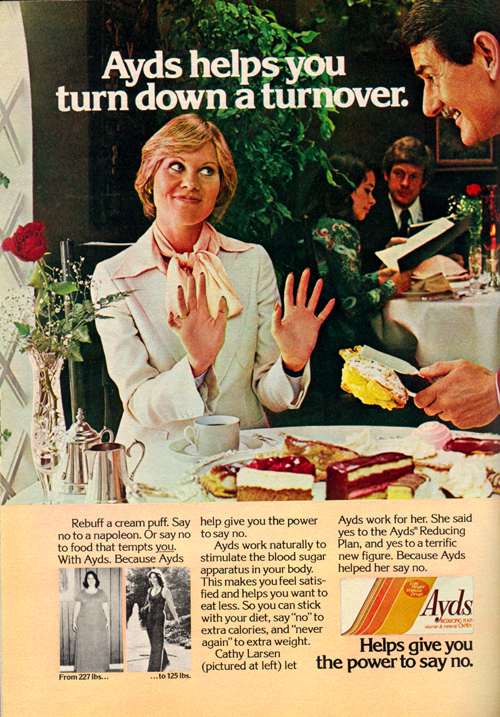

Yeah...
I do tend to feel that there's so much information out there I need to obsessively troll the 'net so I don't "miss" something. But don't spend enough time processing that information.
I need to start meditating again.
CNN.com - Age of information overload - Dec 26, 2005:
I need to start meditating again.
CNN.com - Age of information overload - Dec 26, 2005:
"Will all this instantly accessible information make us much smarter, or simply more stressed? When can we break to think, absorb and ponder all this data?
'People are already struggling and feeling like they need to keep up with the variety of information sources they already have,' said David Greenfield, a psychologist who wrote 'Virtual Addiction.' 'There are upper limits to how much we can manage.'"
The Dilbert Blog: Who is Holier?
The Dilbert Blog: Who is Holier?:
"If Santa Claus fought Jesus, who would win? Tell the kids that grandpa will give $5 to whoever comes up with the best answer.
Then leave the house as quickly as possible."
Tuesday, December 27, 2005
"Just words" Just ideas. Just opinions.
Pissing Off the Buddhists:
"Guys like this always want to give you their teachings. No matter what you say to them, it's an opportunity for them to point out where you're wrong and how your life would be so much better if you could only learn to be just like them. 'I've got this hangnail,' you say. And they come right back at you with, 'The body is but an immaterial object, remain in the now and do not be bothered by its sensations.' Hey, just lend me some nail clippers and shut the fuck up, OK?
The thing that makes it real fun to piss phony Buddhists off is the fact that when they get pissed off, it's not enough for them to just be pissed off. They're also pissed off because they're pissed off. And they're pissed off that they're pissed off that they're pissed off. And... well, you get it, it just goes on like that forever.
...Nishijima once said to me, "It's important to face hated information." I'd been talking to him about some stuff which I found very disturbing to read about. His advice was to read as much of that stuff as I could get my hands on. And y'know, when I did that, I started to see right through that stuff, to see that what I thought was powerful and even dangerous to my psyche was really nothing at all. Just words typed by some human being who saw the world in a certain way. Big, fat, hairy deal.
If my "Buddhist" friends out there in computer land were able to see things in a realistic way, they'd see that that's all my writing was too. Just words. What's far more important than reacting to words is to see just how that process of reacting to words works. You've got to say to yourself, "Who am I? And why is it that I'm getting this kind of a reaction to what I'm reading?" Why is it so important for you to establish that these words are WRONG. Why do you feel the need to try and silence those who say the things you don't like? Or on the other side what is it that makes you think certain words are right, that they're beautiful and stilling. What is it that drives you to seek out stilling, calming words while doing your utmost to avoid anything that disturbs you? "
"Evil Is Stupid"
Evil Is Stupid:
"The Evil Tyrants of the real world never see themselves as evil. Only cartoon villains cackle with glee while rubbing their hands together and dream of ruling the world in the name of all that is wicked and bad. While we may admire our philosophers for the way they grapple with the Problem of Evil, a lot of the great tragedies of our culture stem from people who were trying -- quite nobly in their minds -- to free humanity from the Problem of Evil. Could our philosophers be on the wrong track here? Could they, in fact, be a big part of the problem?
A lot of people in the West can't come to grips with Buddhism because it doesn't address the Problem of Evil. We've got so much invested culturally in the notion of real Evil, that we aren't willing even to entertain the idea that evil may only be a mental concept with no corresponding reality. There's a tendency to try and shoe-horn the concept of evil into Buddhism. The most common way is to look at the idea of karma as an example of Buddhism's view of the Problem of Evil.
The word karma, which really just means 'action,' is often mis-used to refer to the Buddhist idea that the same laws of cause and effect we see evident everywhere in nature apply equally to the realm of mind, and that there is what we could call moral cause and effect. So if you believe in the concept of evil, you might look upon this as an idea that if someone does evil, evil will come back to him or her. And there's an unfortunate tendency to want to insert some kind of deity figure into the picture to mete out the proper punishment to the evil doer...
So even in the idea of karma, Buddhism doesn't address the Problem of Evil. That's because there really isn't any Problem of Evil. There is no Evil in this world. That's a hard one for us Westerners to swallow. But, in fact, there is only the idea of Evil. It's a concept borne out of an idealistic view of the world. It's a way of explaining what we encounter. But it's a piss poor explanation when you look at it carefully.
Evil is not real (and neither is Satan -- sorry Louvin Brothers!). But there is something else, and Buddhism does address this something else. I like to call it stupidity. All that we call "evil" is just plain stupidity. There's a very popular and very stupid idea out there in the world (and in your mind and my mind) that it might be possible to gain something for yourself by causing pain to others, and that you can cause pain to someone else without feeling that pain yourself or without suffering any consequences of your actions. This is a view held by almost every human being in the world -- the "evil" ones as well as the "good" ones. We "good" people hate seeing evil get rewarded while we ourselves behave so purely -- I always feel this way when I see who's won the Grammy Awards®. But the view that a person can cause harm without feeling any ill effects is wrong.
It's wrong because evil always involves another, either someone to whom you do evil or someone who does evil to you. In reality, though, there is no other upon which you can ever perform an act of evil, nor is there any other who can do evil things to you. The idea that you can do harm to others without ever experiencing the effects of what you've done is just plain stupid. It's like getting pissed off at something your left hand did and then punishing your hand by smashing it with a hammer. You miss the point that you alone are responsible for the movement of your hand and that you alone will suffer when your own punishment.
Of course, it's really, really hard for most people to accept the idea of universal oneness. We take our separation from each other as fact. But it's not a fact at all. It's a very deep misunderstanding, a misunderstanding so deep that even our physical senses seem unable to perceive the real situation. Oh but they can. It's just that most of us miss out on these perceptions. You might say they're far too subtle. But it's better to say we're mostly just too stupid to notice the obvious, the way a drunk might not notice he's just vomited all over himself."
Subscribe to:
Posts (Atom)